Tag Archives: NBA

First impressions of SportVU

sportvu

Ever wanted to know how many hockey assists a basketball player racks up, or how many total points a team produces off one player’s passes?

Those statistics come from what all 30 teams have invested in, called the STATS LLC’s SportVU Player Tracking system. It features six cameras installed in catwalks of 29 arenas (the Clippers and Lakers share one, remember), tracking the movement of every player. From there, a program takes in the data and delivers statistics on things like running distance and the assist opportunities I mentioned before, among other things.

And now, those stats are available on NBA.com’s statistic page.

I took a look at all the statistics available, expecting to have no idea how to interpret what they even mean, but the nine categories of available stats (speed & distance, touches/possession, passing, defensive impact, rebounding opportunities, drives, catch & shoot, pull up, and shooting efficiency) were very user-friendly. Most statistics were understandable, but right now standing pat on all the data seems like the right move. Sample sizes for every category are so tiny right now. We’ll have to wait a month or two before analyzing what these statistics say about players we value so highly, ones we value so little, and if SportVU changes our views on those players.

More statistics should be added over time, but what’s available right now by SportVU has been more than enough to keep me glued to my laptop. It helps answer the questions we’ve asked over so many years, but it also left me with new ones. Here are my first impressions from each category and the statistics inside each of them that stood out to me:

Speed and Distance

Definition (from NBA.com): Statistics that measure the distance covered and the average speed of all movements (sprinting, jogging, standing, walking, backwards and forwards) by a player while on the court.

Notable stats

  • Minutes per game
  • Distance Traveled (total miles)
  • Average Speed (mph)
  • Distance Traveled per game (miles)

When filters let viewers sort average speed, etc. by halves and quarters, the minutes per game will be cool to look at. Just how much less distance does a player travel as the game progresses? With that said, I’m still not sure how much weight can be put into stats like average and top speed even when sample sizes increase to an amount worth evaluating.

Distance traveled per game brings the talk about a player’s “mileage” to a literal sense. Just how much does LeBron travel (in distance, not extra steps with the ball) per game? In future seasons, will this further affect how much key players play as the season winds down?

I’ve always been curious just how much players run every game though, and now total miles traveled is a stat. Going into Friday night’s games, Goran Dragic topped at 3.1 miles. Which teams will run more total distance: slower-paced teams because of running more offense in the half court or faster-paced teams who play more possessions overall?

Touches/Possession

Definition: The number of times a player touches and possesses the ball, where those touches occur on the court, how long the player possessed the ball and the number of points, assists and turnovers that occur with the ball in his possession.

Notable stats

  • Touches per game
  • Time of possession with the ball (minutes)
  • Close Touches per game
  • Elbow Touches per game
  • Points per touch

I’d imagine touches per game will be dominated by point guards with star wings and maybe a few sweet passing big men who can get an offense rolling with touches at the elbow. It wouldn’t be surprising either if Al Jefferson and Dwight Howard, two focal points of their team’s offense, will be in the top 25 as well.

Going into Friday’s games, Derrick Favors had 101 touches. He was between Chris Paul (107) and Ricky Rubio (100) for most touches per game. Favors played five more minutes than the two point guards, but I still can’t figure out why he’s in the top three.

But that’s why watching the actual basketball game helps.

I like locations for touches as well, like the close ones. It could be more specific, such as what kind of close touch it is like a post-up, a cut to the rim, or catching a pass off a pick and roll. It’s no surprise on Friday that Marc Gasol led the league in elbow touches per game with 21 as Memphis has run their offense through him at the elbow for some time now.

Points per touch and points per half court touch leave me a little confused right now. Does it only include when the player passes and the guy he passes to shoots?

Passing

Definition: The total number of passes a player makes and the scoring opportunities that come from those passes, whether they lead directly to a teammate scoring a basket or free throw, or if they set up an assist for another teammate.

Notable stats

  • Passes per game
  • FT assists per game
  • Secondary assists per game
  • Assist opportunities per game
  • Points created by assist per game

This is the most exciting category to see. There’s the hockey assist, points created by assists, and free throws created by assists, and assist opportunities which include players who missed their shots.

From 1997 to 2005, Stephon Marbury averaged 8.3 assists per game, which never fails to be surprising when considering how much of a scoring guard he really was. With the era we’re in that features several great point guards (and different types of great point guards), these new statistics may help decipher who really is a creator for others, such as Steve Nash, others who have more selfish assists, like Marbury had once upon a time, those between the two ends of the passing spectrum.

Also, we’ll get to find out just how versatile LeBron James is.

Defensive Impact

Definition: Statistics measuring the impact a player has on defense, including blocks, steals and protecting the rim, which measures the opponent’s field goal percentage at the rim while it is being defended. Rim protection is defined as the defender being within five feet of the basket and within five feet of the offensive player attempting the shot.

Notable stats

  • Opponents’ field goals made at rim per game
  • Opponents’ field goal attempts at rim per game
  • Opponents’ field goal percentage at rim

These should show the difference between big men like Carlos Boozer and Roy Hibbert and guards like Steve Blake and Avery Bradley. Like everything else in these new statistics, we need a month or two before putting some weight into how many attempts a player allows at the rim and just how effective they prevent those attempts from being points.

Rebounding Opportunities

Definition: The number of times player was within the vicinity (3.5 ft) of a rebound. Measures the number of rebounds a player recovers compared to the number of rebounding chances available as well as whether or not the rebound was contested by an opponent or deferred to a teammate.

Notable stats

  • % of rebounds per chance
  • Rebound chances per game
  • Contested rebounds per game
  • Uncontested rebounds per game
  • Contested rebound %

Another exciting category, much like assists in a way. Are some players’ rebounding numbers more inflated than others? Now we get to see just how many rebounding opportunities a player has and how many times they take advantage of those. It can also be telling of how often a player crashes the boards.

And then it’s divided into two more categories: contested and uncontested. In a way, this reminds me of misleading 3-point percentages. It’s easier to grab an uncontested rebound, much like it’s easier to make an open 3-point attempt (unless you’re too wide open). Some three-point shooters, like Ray Allen, can make both kinds. Others, like Rajon Rondo who shot 35 percent from three last November, have much better success when wide open.

We’ll see if a similar case involves rebounding. There’s already been an advance in rebounding statistics, such as the percentage of rebounds a player grabs compared to total shots taken while said player is on the floor, but this adds another wrinkle.

And by wrinkle, I mean a really cool stat.

Drives

Definition: Any touch that starts at least 20 feet of the hoop and is dribbled within 10 feet of the hoop and excludes fast breaks. Measures the total number of drives as well as the points, assists and shooting percentages on drives to the basket.

Notable stats

  • Field goal % on drives
  • Total player points on drives
  • Drives per game
  • Player points per game on drives
  • Team points per game on drives

Just how scary is a player when he starts around the arc and gets into the paint? Like total points from assist opportunities, now we’ll get to see how many points are produced when a player drives into the lane.

After watching the Magic-Wolves matchup Wednesday night, it’s no surprise to see Jameer Nelson being one of the top players in drives per game (as of Friday) but also in the middle of the road when it comes to team points from those drives. It confirms what I saw from Nelson as he would slash into the lane but look for opportunities for others to score once he got there. He’s really only like 5’9”, so looking to pass instead of score would make sense, only there were rarely any good looks generated from his drives.

Meanwhile, James Harden, Ricky Rubio, and John Wall, among others, have generated more team points than Nelson which is understandable. They’re all taller and either finish stronger or have uncanny court vision.

We’re only a few days into the season though, so the sample size for everything, including drives, is microscopic.

Catch and Shoot

Definition: Any jump shot outside of 10 feet where a player possessed the ball for 2 seconds or less and took no dribbles.

Notable stats

  • Catch and shoot points per game
  • Catch and shoot field goals made per game
  • Catch and shoot field goals attempted per game
  • Catch and shoot field goal %
  • Repeat last three for 3-point shots
  • Catch and shoot effective field goal percentage

Basketball-Reference in particular already has ways to show who scores off of passes versus off their own dribble, thanks to assist percentages off made field goals. Danny Green’s made threes last season, for example, were assisted 95.7 percent of the time while Chris Paul’s were at 41.5.

But now we get to see how many total points come off catch and shoot opportunities without the help of a calculator, as well as effective field goal percentages and just how many attempts are taken per game.

Pull Up

Definition: Any jump shot outside 10 feet where a player took 1 or more dribbles before shooting.

Notable stats

  • Pull up points per game
  • Pull up field goals made per game
  • Pull up field goal attempts per game
  • Pull up field goal percentage
  • Repeat last three for 3-point shots
  • Pull up effective field goal percentage

It looks like this category would go hand in hand with Drives as to how often a player pulls up from the perimeter versus going all the way to the paint for a bucket.

With the statistics available, we’ll now get to see just how good a player shoots off the dribble from three and how often they take shots from there. It can also help differentiate players who prefer to either get all the way to the basket or shoot a three from those who spread their shots from everywhere on the court. The analytic minds prefer the former, so statistical categories like the Pull Up and Drives help assist what’s already available to look at.

Shooting Efficiency

Want to kill a few birds with one stone or get a few different stats in one click? This is basically putting a bunch of offensive stats together: Drives points and %, catch and shoot points and %, and pull up shot points and %, and effective field goal percentage.

It’s an exciting time for basketball analytics. What was available just over a decade now, like shot locations and shooting percentages from areas on the court, has been expanded into tracking every movement of every player on the court. Who knows what will be available in another decade. Will a stat from SportVU like points created by assist per game become so standard by 2023 that we’ll be curious about a new stat that will trump it?

It feels like this is only the beginning.

2014: The season of comebacks

Maybe it’s because this will be my first basketball season without worrying about school, but the 2013 offseason was the slowest that I can remember, even topping (or in this case, bottoming?) the 2011 lockout.

The preseason, now what I call the weird season after watching Andray Blatche hoist six threes against the Celtics, didn’t help my NBA withdrawals either. There was this gem, however:

But just when it was tempting to resort to swallowing Halloween candy whole to cure my boredom, the NBA season arrived. There are the usual storylines coming into 2014: the off-season acquisitions we have to wait and see on whether they work out or not, the youthful players we hope evolve into franchise cornerstones, lottery-bound teams last season looking to get back into contention, and so much more.

If I had to pick a working title for this season right now though, it would be “The Season of Comebacks”, starring Derrick Rose, Kobe Bryant and Rajon Rondo, among others, who are returning after suffering devastating injuries a season or two ago. We’ll get to see one of those comebacks tonight in Rose, and what a bang he should start the season off with.

But the returns of Kobe and Rondo are still up in the air thanks to another unique element playing into this season: the 2014 NBA Draft. We may witness as much terrible basketball, thanks to tankapalooza, as much as we will witness great play with so many teams having a fighter’s chance at making this season’s Finals.

Whatever the dream matchup for the 2014 Finals may be, it’ll be quite a challenge to outperform what was a battle for the ages between the Spurs and Heat. It feels like that happened forever ago, yet somehow only four months have passed since its conclusion. I just remember wanting more after Game 7 but, after looking back at all that took place, feeling satisfied at the same time. It was like an ending to a great, season-long story.

How will we remember 2014? It’s time for its story to begin. 

What’s the big deal about half-court heaves?

The half-court heave: Arguably basketball’s most exciting way to score, save for a dunk or game-winning bucket.

Check out the crowd before and after these makes by Alonzo Gee and Jarrett Jack:

Even misses are exciting:

The heaves are like a golfer on their second shot of a par five 18th hole, going for a green that has zero hazards surrounding it. Rarely, if ever, will the golfer score eagle or better (or even a par if their putting is as bad as mine), but it doesn’t hurt to try.

That’s not how some players in the NBA see it though. Some see a massive pond surrounding the green, with alligators and all sorts of other potential danger lurking. Maybe the latter is an exaggeration, but not every player sees a last-second heave as a win-win. It’s viewed instead like a harm to their shooting percentages. After all, about 98 percent of all half-court to full-court heaves are missed. Since 2001, players are 104-for-4,451 from that extended area, according to Basketball-Reference. (For a yearly breakdown, click here.)

That’s a whopping 2.3 percent that drop. The effective field goal percentage (when taking into account that a three-point shot is worth more than a two) isn’t much better at 3.5. To reach an EFG% of 50, 1,483 of those 4,451 half-court to full-court shots would have to go in, or the 104 that dropped would have to be worth about 43 points each. If that were the case, several fans would have defined roles on NBA rosters.

For those who either don’t take the last-second shot or wait just after the buzzer to let them fly, the team is negatively impacted on a situation that should normally be a win-win. Back in February, Royce Young posted a great breakdown detailing how Thunder coach Scott Brooks practically begged for his players to take the last-second heaves, despite the odds being against them.

From Young’s piece at the Daily Thunder:

“We talked about it, about seven weeks ago maybe, couple months ago, and we talked about it,” Brooks said. “I said ‘We have to shoot that shot. There’s still time in the game — shoot it.’ The only time we don’t shoot it is if we’re up and it’s the last seconds because you don’t want to do that.

“We had that talk and somebody on our team did not take it that same night, and then we all got on him,” he said. “The next night, somebody made that shot.”

There was a divide between what each Thunder player would do if they had the ball in the backcourt with the clock winding down, most notably between stat-conscious players like Kevin Durant and Kevin Martin and others willing to let the heaves fly like Russell Westbrook and Thabo Sefolosha.

From Young’s piece once again:

How do Thunder players feel about the halfcourt heave? Should it be counted as an attempt? And do they pull the just-after-the-buzzer move? I asked some of them:

Kevin Durant: “It depends on what I’m shooting from the field. First quarter if I’m 4-for-4, I let it go. Third quarter if I’m like 10-for-16, or 10-for-17, I might let it go. But if I’m like 8-for-19, I’m going to go ahead and dribble one more second and let that buzzer go off and then throw it up there. So it depends on how the game’s going.”

Kevin Martin: “Yes, I’ve noticed it a lot. For myself? I like to be considered an efficient scorer, so I think that’ll answer your question on how I approach that shot … [Brooks] said something about if no one wants to shoot it, go up and grab it. Don’t be the person to grab it and wait. And then I think Eric Maynor hit a shot or Russ hit a shot … If they changed that rule [to not count it], I’d probably shoot a lot more of them. Some people like to shoot the halfcourt shot, some people don’t.”

Russell Westbrook: “No. Nope … If I was considering about [statistics] I’d do a lot of shit different.”

Thabo Sefolosha: “Personally if I have it, I shoot it. I’ve seen players not shoot it at all, or seen players shoot it late. I’ve seen that before … [Brooks] did, he mentioned it. In the team, most of us, I think we take the shot. But you see players that don’t do it … You gotta count it [as a shot]. You gotta count it. It’s a shot. But who cares really. I don’t care about that kind of stuff. One more shot, make or miss, is not going to break or make me, so I shoot it.”

Even Shane Battier expressed his thoughts about the last-second heaves in an interview with Sam Amick of USA Today Sports:

“If you’re a true shooter, those shots add up,” he said, while making it clear that his view was also the opinion of most, if not all, NBA players. “It’s not worth it (to shoot them). Even though statistically speaking, it’s a positive – it’s a plus-play (in terms of probabilities of success). If you shot every buzzer beater, you’re going to make one out of – whatever the odds are.

“Even the heave is a plus-play. But unfortunately we’re not judged on the plus-plays. We’re judged on (shooting) percentages. I think they should take the heave out of the stat book. It’s common sense.”

Bricking half-court shots in the beginning of the season might cause a worrisome downtick in shooting percentages, but they would be hardly noticeable by the end. If anything, fantasy basketball owners who drafted the heavers are likely impacted more than the heavers themselves.

Besides, whether Durant’s shooting 8-for-19 or 8-for-20, it’s still a bad shooting night. I actually thought it would be the other way around for him, more willing to take the low-percentage shot while having a bad game versus a good one. He was also in a chase last year for the 50-40-90 club (50 percent from the field, 40 percent from three and 90 percent on free throws), which he eventually achieved with 51-41.6-90.5 splits.

To fall below the 50-40-90 club, Durant would have had to take and miss 14 heaves, which would’ve been the highest yearly total in Basketball-Reference’s database that dates back to 2001. Jason “White Chocolate” Williams and Andre Miller each attempted 12 in 2001. Miller’s the most notorious heaver, going 3-for-102 over the last 13 seasons. Jason Kidd has the most makes with four (out of 44 attempts), but nobody comes to Andre Miller’s total attempts. Steve Blake is second with 46, while making only one. (There’s a few more players listed in a bit.)

The worrying about percentages is overblown when looking at Miller, whose heaves barely put a damper on his three-point shooting percentages. For his career, he’s 173-for-825 over 14 seasons. That’s good for a measly 21 percent. Take the heaves away and that’s bumped up to 23.5, only a 2.5 percent difference for someone who doesn’t even take one three-point attempt per game. The difference for Durant would be much smaller.

Season by season, Miller’s half-court attempts matter only slightly more. He took 12 heaves in the 2000-01 season and made one. Take the misses away and Miller’s three-point percentage goes from 26.6 to 32.1. That may seem like a big deal, but it still only amounts to Miller making 17 threes over 82 games. Even Rajon Rondo has done that. Miller probably made his threes in as similar a fashion as Rondo: from either being left wide open or with the shot clock winding down.

Besides three-point shooting, Miller does just about everything else well for a point guard and, as a result, has carved out a long-lasting career. The heaves won’t affect his chances at getting a new contract when it’s time to negotiate.

What about sharpshooters?

In the quotes by Battier, there was worry about players being judged by their percentages, likely concerning those who take the majority of their shots from beyond the arc. All-stars who get picked apart, volume shooters, and even sharpshooters (that Battier was likely concerning) have all taken their fair share of heaves throughout their careers though and have done just fine with finding teams to play for. Here are some of each:

Steve Blake: 1-46

Kobe Bryant: 0-44

Jason Kidd: 4-44

Baron Davis: 2-43

Jamal Crawford: 0-39

  • Had a terrible 2012 season yet got a four-year, $21.35 million contract from the Clippers the following summer.

J.R. Smith: 0-34

Andre Iguodala: 1-31

LeBron James: 0-30

Ray Allen: 0-30

  • Yep, one of the best shooters ever takes buzzer-beating heaves.

Nate Robinson: 1-29

  • He’s actually a pretty good three-point shooter and found his way to a new contract with the Nuggets.

Carmelo Anthony: 0-27

  • 27 heaves, even with a reputation literally as a chucker.

Martell Webster: 0-22

  • Got a four-year, $22 million contract from the Wiz this summer.

Dirk Nowitzki: 0-20

It’s still quite weird that the most heaves anyone has taken over their career, besides Miller’s, is 46 by Steve Blake. LeBron’s averaged only three heaves per season and it feels like there should be an extra zero at the end of the total by J.R. Smith.

What can be done to encourage more of these attempts from long, long range?

I left a quote out from Sam Amick’s interview with Shane Battier about what players would do if heaves were left out of the stat book. Here it is:

And if they did change the rule book to reflect this stance?

“You’d have guys fighting to take that shot, because it’s a hell of a fun shot,” he said. “We shoot those shots every day in practice.”

So fans love heaves and, deep down, players love them too.

The most simple solution to increase the frequency of them would be to only count those that go in, like a sacrifice bunt. It won’t go into the box scores if it’s a miss.

Not counting heaves in the stat book, unless they go in, also puts fantasy basketball owners of Andre Miller at ease. As for sports bettors who often take the under on scoring totals, good thing heaves rarely go in and don’t count for 40 points (yet). 

Until then, we’ll see if attempts from beyond half-court either stay steady or unfortunately decline. So far, so good, at least in the pre-season: 

It’ll be interesting to see if the fearless heaves continue once the regular season kicks off, or if more will be made by fans than actual NBA players.

A follow up that post can be found here.

What was the NBA like when Golden State last won in San Antonio?

As a basketball fan in Minnesota, I hear a lot about the Lakers’ 22-game winning streak against the local  Timberwolves. There’s hope next year, but I’ve been saying that since 2006.

It’s been even longer for Golden State and their struggles at San Antonio. Their last win came on Valentine’s Day in 1997.

What were those teams like 16 years ago?

  • Three coaches in 2013 played for the Spurs in ’97: Vinny Del Negro, Monty Williams, and Avery Johnson. Avery Johnson was fired from the Brooklyn Nets this year and replaced by P.J. Carlesimo, who was the head coach of the Golden State Warriors in 1997.
  • Dominique Wilkins was also a Spur.
  • The game was played at the Alamodome.
  • Latrell Sprewell was a member of the Warriors. We were still nine months away from his choking incident with Carlesimo.
  • Other notable Warriors: Chris Mullin, Mark Price, and Felton Spencer.
  • San Antonio was in the tank for some dude named Tim Duncan. Meanwhile, the Minnesota Timberwolves were about to make their first playoff appearance in franchise history. Hmm.

Here were the logos of each team back then:

Golden State's logo back in 1997. It would change a year later.

Golden State’s logo back in 1997. It would change a year later. They still sucked.

The Spurs' logo from 1989 to 2002.

San Antonio Spurs’ logo from 1989 to 2002. Green, pink and orange. Let that sink in.

Since the last Warriors victory in San Antonio, four teams have relocated (Vancouver, Charlotte, Seattle, and New Jersey). One team has been added (Charlotte Bobcats), and there’s been about a kagillion uniform changes.

Here were some notable jerseys that made their debut during the ’97 season:

real97    jazz98         97

What else was the NBA like back in 1997?

  • Tom Gugliotta and Stephon Marbury were Minnesota Timberwolves, Chris Webber was a Washington Bullet, Damon Stoudemire was a Toronto Raptor, and Jalen Rose was playing his first season as an Indiana Pacer.
  • The rookie class consisted of Allen Iverson, Jermaine O’Neal, Ray Allen, Steve Nash, and Kobe Bryant.
  • Kevin Garnett wasn’t even old enough to drink yet, but made his first All-Star Game. Anthony Davis was only three years old and Dikembe Mutombo was only 56.
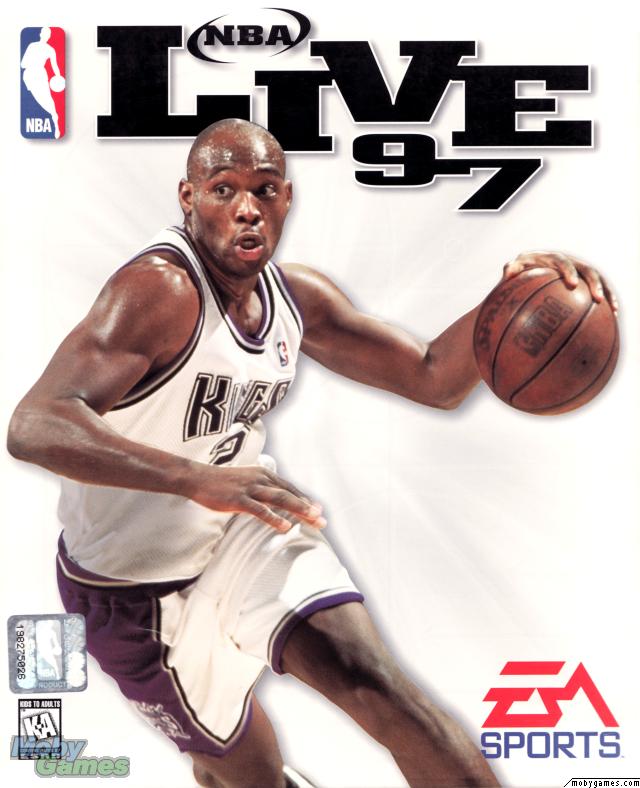
  • The awesomeness of NBA Live 97 was born.
  • The Clippers (36-46) won more games in 1997 than the Celtics and the Spurs combined.

Other notables in late ’96, early ’97:

  • Bill Clinton was inaugurated for his second term on January 20.
  • Filling up gas didn’t feel like as much of a chore.
  • The Green Bay Packers beat the New England Patriots in Super Bowl XXXI. I was rooting for the Packers.
  • The Yankees won the ’96 World Series with youngsters Derek Jeter and Andy Pettitte.
  • Roger Clemens was a Red Sock, Curt Schilling was a Philly, and Alex Rodriguez enjoyed his first full season as a Seattle Mariner. It’s also worth noting that A-Rod wasn’t really that hated back then.

I would go into a novel about how awesome life was back in the ’90s, but there’s some basketball to watch. Speaking of television, here are some quick hits on some TV shows back in ’97:

  • King of the Hill premiered on January 12. Recess premiered on ABC nearly eight months later.
  • Fox’s first Super Bowl telecast. Still five years from dealing with Joe Buck.
  • We were still six months from South Park airing on Comedy Central.

Notable films in ’97:

  • Titanic
  • The Lost World: Jurassic Park
  • Men in Black
  • Tomorrow Never Dies
  • Liar Liar

Unfortunately, all of them debuted after the Warriors’ last victory in San Antonio.

And now, a potential 30 for 30 about the Warriors’ 16-year drought at San Antonio. Will it continue to 17?

Luke Walton is in a complicated relationship — with his facemask

Luke Walton’s taken advantage of his extra playing time in Cleveland, becoming a role player for the struggling Cavaliers. In his last 10 games he’s averaged 4.1 points, 4.9 assists, 3.1 rebounds, and shooting 46 percent from three.

But on March 16, Walton broke his nose in a game against San Antonio. He donned a facemask — the fourth time a Cleveland Cavalier has done so this season — in the following game against Indiana. It didn’t last long. Walton removed the mask after only a few minutes.

Things are getting better between Walton and his protective mask, though, even after a recent loss to Miami. From the Cleveland Plain Dealer:

Luke Walton didn’t want to hurt the mask’s feelings.

When the Cavaliers’ veteran forward was asked how much he hated the clear mask he’s supposed to be wearing to protect his broken nose, he smiled and said, “I’m trying to develop a relationship with it, so I don’t want to talk bad about it.”

Maybe Walton realized the times you think you don’t need your significant other are actually the times you need it most:

All it took was one shot to the nose to convince Walton he had to make peace with the mask.

“I didn’t even get hit that hard and I started to get a headache and my eye was hurting so I’m going with the mask,” he said. “I’m going to keep wearing it until it gets comfortable and familiar. I’ve been wearing it around the last 24 hours trying to get more comfortable with it.

Hopefully the protective mask doesn’t weigh him down. Love’s not supposed to work like that.