Tag Archives: sports

Non-conference update: The West wins the most active week yet

Two months ago, Basketball-Reference provided history of non-conference games in a really cool table, one that showed the West winning this year’s matchups at a frequency not seen in nearly 55 years, back when the league had “divisions”. A few weeks passed before I started a weekly update tracking the rest of the non-conference games.

The 15th week of the season featured the most active stretch of the East’s teams playing the West’s, 33 played total with each conference winning 10 at home. The West won eight on the road, though, while the East took just five. Below is the updated week-by-week breakdown:

The 45.5 percent win rate the East had last week would be solid over an entire season. That’s if they ever cared about non-conference statistics. It’s fine if they don’t, especially when the games have nowhere as much impact as they do for the West.

Indiana and Miami are still the only East teams to have 10 wins in non-conference play, but in Week 15 the conference as a whole blew some winnable games. The Cavs heard the thud that is rock-bottom after falling to the Lakers while the Heat sparked a search for a replacement to the term “coasting” after losing to Utah. Some suggestions: sailing, floating, drifting, and freewheeling. Heatwheeling?

As for the West, below is an updated breakdown of how many games each team has left against the East. It impacts both the playoff race and the lottery with the former benefiting from more non-conference games while the latter hopes for less. The more games the Jazz and Lakers play against West teams jousting for playoff seeding, the higher likelihood they’ll accumulate more lottery balls.

With DeMarcus Cousins, Rudy Gay and Isiah Thomas, it’s hard to believe Sacramento finishes as the worst team in the West. Recent injuries to the first two players hasn’t helped, but the Lakers are all sorts of banged up too. Utah’s wedged in between them with some nice pieces themselves.

As for the playoff teams and contenders, most are in that 9 to 12-game range against the East with Memphis and Golden State having some extras, which is huge when they’re both just trying to make the postseason versus deciding who they’d like to host in the first round. Meanwhile, the Clippers are running out of near-gimmes against the East but it’s right when Chris Paul is returning and Blake Griffin is making a case as the best power forward in the league. As usual, looking at non-conference games is helpful but remaining back-to-backs and home/away games are just as important too.

There’s also this thing called the trade deadline that’s creeping into front offices. Will a team out West grab Arron Afflalo? What about Greg Monroe, Josh Smith, or whatever else Detroit could look to trade? Cleveland’s another East team that could swap some players such as Dion Waiters or Anderson Varejao.

For the heck of it, though, below is Week 16’s non-conference schedule. There’s only three days of games but about as many will be played as any other random week:

The East has 10 home games compared to the West’s six. That’s also the amount of wins I think each conference could pull off, respectively, though a couple East teams always fail to win down the stretch.

Maybe this is the week they turn in a dominant performance, though slowly working towards a respectable winning percentage against the West is just as fine. It’s like I’ve felt that way all season about most of the East’s teams.

For the other non-conference posts, check this out.
Half-court heaves: A follow up on pre-season curiosity

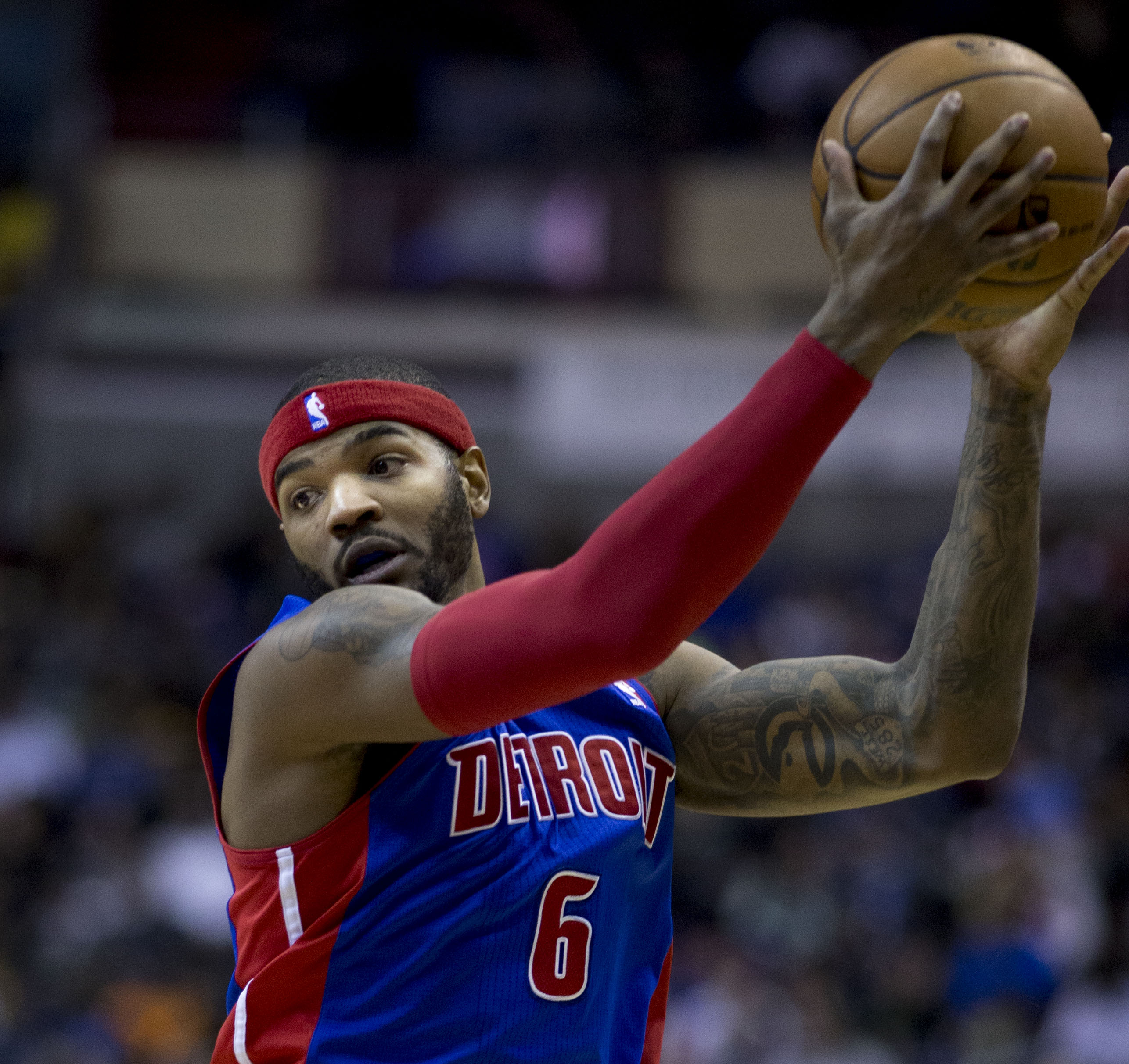
It’s that time of the season where I’ll be following up on posts I made three to four months ago, most likely relating to predictions or curiosity about a player or team. For example, a few days ago I looked at Josh Smith’s shot selection that I was fine with in November but now fascinated by how badly it could regress. Today I’ll go even further with low-percentage shots, following up with pre-season curiosity about how players would approach buzzer-beating half-court shots in a time when efficiency is as important as ever.

With the way the heaves are counted in the stats, they create a unique conflict between a team and the player holding the ball during the final seconds of a quarter. Taking those shots with the clock winding down would obviously be efficient from a team’s standpoint. The opposition is never getting the ball back so it’s a chance for a free three points, points a team is rewarded with about 2.3 percent of the time (more on that soon). That percentage, however, has made some players hesitant to take those shots because of the harm to their individual shooting numbers.

Fast forward to now and this season’s heave total is actually on pace to match 2013’s, give or take a few attempts. Below is a season-by-season tally according to Basketball-Reference that dates back to when they first charted shots. Only attempts taken from 47 feet and beyond were accounted for, though I thought about 45 before staying literal with heaves beyond half court.

Since the league only needs five more made heaves to break the record set in 2010, I just might have to update (or not) whenever one goes in. Below are the eight players who have made shots so far.

Though my calculations might be off, to reach an effective field goal percentage of .500 we’d need one of the following two to happen:

  1. 1,562 of those 4,686 total heaves would have to go in. This is where Stephen Curry becomes useful.
  2. The actual 110 that went in would have to be worth about 42.5 points each. 2014’s “heater” took a sliver off their possible value. Coming into the season, they would’ve been worth closer to 43. Whatever. This is where Curry would become VERY useful. Jamal Crawford, too.

In the first post about the heaves, I wrote that the impact of those shots to a player’s shooting stats isn’t as big of a deal as they might think and both past and current all-stars like Jason Kidd, Ray Allen, LeBron James, and Kobe Bryant all have taken over 30 career heaves from beyond half court (all the cool kids are doing it!). Unfortunately, that alone likely wouldn’t encourage more shots. A better chance would be implementing a rule that treats heaves like how baseball treats sacrifice bunts and flies. If the shots go in they’ll count and if they miss it’s absent from the stat sheet.

Regardless, now that the season’s over halfway done we can look at how heaves have affected three-point percentages so far. Below is a table featuring every player who has taken three or more shots from half court and beyond.

Most players’ three-point percentages change by less than one point and each team still has 30 or more games to go, so there’s plenty of time for the impact of heaves to look even smaller.

Lance Stephenson arguably has the most at stake, though, as he hangs around league-average three-point shooting while on an expiring contract. Reggie Jackson (who leads the league in heaves this season with seven) and Alec Burks are other players to watch, but a few missed buzzer-beaters shouldn’t matter for others. Guys like Andre Miller (the most notorious heaver with over 100 career attempts) and Tyreke Evans, for example, aren’t known for their range. Their percentage from 50 feet out is roughly the same from 25, well almost. Looking at the table, Tony Wroten‘s actually a close call.

Those who are the most negatively affected by heaves are probably sports bettors who have the under on a point total and fantasy basketball owners of players who take last-second shots. A fantasy team with Evans, Miller, and Burks might have to punt three-pointers and maybe even points, though the latter wouldn’t be the case if half-court heaves were worth over 40 points.

Josh Smith’s shooting has reached it’s low point, or has it?

Keith Allison | Flickr

Keith Allison | Flickr

Three months ago I dedicated a post to Josh Smith’s shot selection, back when it wasn’t so rough on the eyes. The newly-signed Pistons forward hoisted 23 threes through the first three games of the season but the mid-range attempts were mostly absent. A long shot to be an above-average shooter, having Smith take a step behind the line instead of taking 20-foot two-pointers was a step in the right direction, one that would yield more points per attempt from jump shots he’d have to take when playing alongside Greg Monroe and Andre Drummond. It was a hopeful sign of efficiency.

Fast forward to now. Smith’s recording career-lows in PER, true shooting percentage, effective field goal percentage, and free throw rate. His threes and shots in the dead zone combine for about half his field goal attempts, most of them being bricks that create shot chart blood. However, the floor on Smith’s three-point percentage is most remarkable, possibly still untapped despite being on pace to be the worst three-point shooter of all time by a whole two percentage points, minimum 200 attempts. His 166 tries have dropped 23.5 percent of the time but the monthly splits worsen each month:

smithgraph1

Smith’s just 16-for-87 beyond the arc (18.4 percent) over his last 30 games. SportVU lists him as the worst three-point shooter in catch-and-shoot situations (24.7 percent) among the top 100 players in attempts, with teammate Charlie Villanueva second to last. His percentages are even worse in pull up attempts, though those shots have rarely occurred and it’s common for players to struggle shooting off the dribble versus a pass.

The good news is that Smith’s three-point rate is dropping. Here’s a table of those monthly splits with his mid-range rate and free throw rate included, via NBA.com. (I left out October and February because small sample size.)

smithgraph2

The three-point rates in December and January match up with Smith’s last season in Atlanta. Maybe they have to do with Detroit’s big three of Smith, Drummond, and Monroe playing together less frequently each month. According to NBA.com, the trio was together 18.7 minutes in November, 16.2 in December, and 15.0 in January. Neither monthly split yielded positive results, though that’s not 100 percent on Smith. The trio needs to be severely staggered, and Brandon Jennings at point guard hasn’t helped any.

The other evil in Smith’s game is the mid-range shot. The heater from that area of the floor last month, one that gave him a nice uptick in true shooting percentage was obvious, possibly even fatal fool’s gold after last night’s performance in Miami. Smith’s never shot better than 39 percent from mid-range in a single season, and there’s a chance if the three-point line was shortened like it was from 1995 to 1997 that he’d likely experience little to no improvement like players listed here.

As disappointing as Smith’s shooting has been, he’s not the sole reason for Detroit sitting in ninth place behind Charlotte and Washington. His shooting is costly but he would have more to offer if he wasn’t playing small forward over half the time, a position that helps neglect the skills he provides on both offense and defense. The Pistons, however, are going nowhere unless a third of its frontline is shipped out. Trading Smith would be impressive when he’s on the books until 2017 at $13.5 million a pop, but Monroe seems like the most moveable piece given his looming, steep raise next summer, one possibly not worth it given the holes in his defense.

Then again, the same could’ve been said about Smith’s contract and whether or not it’s worth paying him to play on the perimeter. Joe Dumars must’ve thought it was but the results, at least on offense, have been a three-month migraine. There’s plenty of room for improvement in Smith’s shooting with some of it bound to happen given how bad things have become, but the slight possibility that the worst-case scenario remains to be seen is amazing in itself.

90s NBA: Players who shot worse from the shortened three-point line

During last night’s barn/dome burner at Syracuse, I noticed Derrick Coleman getting some love from the broadcasters. Looking at his NBA stats from Basketball-Reference, I noticed two odd things:

  1. Coleman shot threes, but like Charles Barkley and Josh Smith he bricked many.
  2. Coleman shot worse from the shortened three-point line, the one that went from 23’9″ around the arc to a uniform 22 feet from 1995 to 1997, than he did from the modern-day line. From 1995 to 1997, he shot 67-for-260 (25.8 percent) from three. His other seasons combined: 259-for-845 (30.7 percent).

Some searching on Basketball-Reference showed that quite a few other players had the same, weird drop-off in three-point percentage from a shortened line. Others shot better when the arc went back to the normal 23’9″ (with the 22-foot corners staying) in 1998 while some experienced both the drop off from 1994 to 1995-1997 and the uptick the following season.

Whatever the case, below is a table to show those players who met the criteria previously listed with an additional two requirements:

  1. Play at least 50 games in a season.
  2. Average at least one three-point attempt per game.

Seasons with the shortened three-point line are highlighted in blue and regular three-point lines highlighted in red. It’s a decent-sized list, so just use the bar on the right side to scroll up or down.

Some reasons off the top of my head on why players would struggle with a shorter three-point line:

  1. With a shorter arc, defenders had less distance to cover when running a shooter off it. Shooters who took an extra tenth of a second to get their shot off would be affected the most.
  2. Three-point specialists might not have been used to shooting a foot or two closer to the hoop, though in time they would adjust.
  3. Some players are asked to create with the shot clock winding down. A closer three-point line may have led to more contested shots from beyond the arc versus 22-foot twos. That’s not a problem when three points are worth more than two, but the three-point percentage took a dip nonetheless.
  4. It was just variance running it’s course, though more often than not it reared its ugly head at the players listed in the table.

Other thoughts are certainly welcome.

Just for fun, I’ll end this post with a table featuring notable players who benefited from the shorter three-point line and then saw their three-point percentage (and possibly three-point attempts) decline after the 1997 season.

Opposite from the previous table, the shortened three-point line is highlighted in red and the modern-day line in blue:

Any excuses I made about players shooting worse from the shortened line might be crushed thanks to that second table. There’s a lot of what-ifs after looking at it, such as Allen Iverson and Michael Jordan, among others, having even more ridiculous point totals had the arc remained shortened. Clyde Drexler‘s another shooting guard who would’ve benefited.

Big men like Terry Mills and Arvydas Sabonis would’ve had all sorts of fun, and if a time machine could take LaMarcus Aldridge to 1995 to 1997, he too would feast. LUNCH MEAT.